
-
Call us9846818877


How to Choose the Right Louver for Home and Office
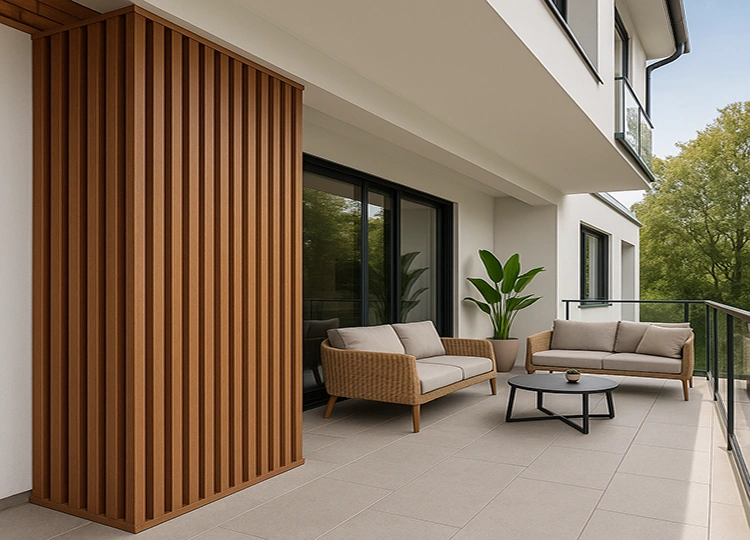
Louvers are often used to improve the appearance of walls, partitions and ceilings in both home and office environments. Louvers are designed to serve a functional role, and architects and interior designers are well placed to take advantage of the role louvers play in adding an interesting texture to various surfaces in a home or office. When selecting a louver for a project, a number of factors have to be considered.
There are numerous ways of integrating louvers in the home and office to create an attractive environment.
What is a Louver Panel?
A louver panel is a panel made from a combination of several slats which are arranged in a vertical or horizontal pattern. Louver panels are used to create partitions and isolate spaces in ceilings and walls.
Louvers are available in different shapes, sizes, colors and materials. When used to create partitions and isolation in a room, PVC louvers are the best. Compared to other materials, PVC louvers are light in weight, and of low cost. They are also easy to clean.
1. Determine the Role of the Louvers
It is important to consider the function which the louvers are expected to perform. For example, in an office space, louvers may be needed to create a partition for privacy.
Expected residential uses of louvers include the following:
- Accent walls in living rooms and bedrooms
- Wall behind TVs and entertainment units
- Walls and partitions in dining areas and foyers
- Staircases
Louvers are useful for creating different functional and aesthetic workspace environments. The determination of the function of louvers allows consideration of the material and finish.
2. Identify the Possible Functions of Louvers
The material used to manufacture louvers can also influence the design. Besides wood, louvers can also be manufactured from aluminum. Decorative designs can also be incorporated on louvers.
Louvers can be installed to achieve a given level of closeness to create a particular effect. Louvers can also be used to conceal unsightly equipment.
Incorporating louvers can influence the wall finish of other parts of a room. Louvers can be used to complement other wall finishes and enhance a given wall finish.
Different colors used for louvers also influence the design. The color of louvers can be dependent on the function of a given workplace. Louvers can also be used to display a given company’s philosophy or integrate a company’s colors.
Swatches displayed on a computer or printer can often mislead the consumer into believing that a color will look a certain way when, in fact, it can look drastically different. Because of this, it is imperative that the consumer reviews samples in various lights and reflections.
3. Consider Size and Profile
Thin louvers create a design that appears busy. Using a thicker louver profile gives the design a better sense of depth and spaciousness.
A louver wall design can break up a large space; however, a large space can appear very busy if a lot of small louver wall designs are incorporated. When a designer is considering a louver wall design, the size and shape of the space must be reviewed.
4. Consider Maintenance
Factors such as maintenance must be reviewed to determine if a design element is appropriate. For example, louvers create pockets, and if the design collects a lot of dust, it can negatively affect the design.
Pockets created by louvers can collect a lot of dust. This is especially problematic if the design element is located in a busy area, like an office. Ease of maintenance is therefore very important. Louvers constructed from PVC sheets are very effective.
Factors such as ease of construction and maintenance support the use of PVC louvers for a given design.
5. Determine Louver Performance
The use conditions and the environment in which louvers are installed impact the service life of the product.
Before a purchase, find out the product’s composition, the buyer’s estimated use, and the end user’s conditions. The product’s use determines the performance of the product. If you are an extensive or first-time buyer, determine the performance of the product.
6. Know Your Supplier
The company you select for a project can make or mar the success of the project. A good supplier of louvers assists you in selecting the product and provides information about the product.
When constructing or renovating an office, residential or commercial space, it is important to assess louvers. You must assess the product against your requirements and evaluate samples. You must also find out the method of installation.
Choosing the Right Louver Material and Profile
Louver panels are available in different materials and profiles. Wooden and PVC louvers are commonly found. Louver profiles can be Dutch or Bull-Nosed. Color is also important, as louvers are available in different colors and finishes.
Depending upon the application, budget, durability and the concerns of the user, the profile and material of the louvers must be selected. The design of louvers must be such that it protects and improves the quality of the space.
Space and purpose determine the type of louver selected. Louvers used for space differentiation or division must be sufficiently stiff. Louvers can be used for ceiling, wall and partition linings, as well as interior partitions in residential and commercial buildings.
For application features, louvers used for wall linings, including reception and office walls, require a finish that minimizes maintenance. PVC louvers, for instance, may be a good option for such an application. It is important to work with a good louver supplier to identify the most appropriate louvers for your project.
From a general perspective, louvers made from PVC can be used for several residential applications. Compared to other materials, PVC louvers have several advantages including a broad range of designs and finishes, and a comparatively lightweight construction. Louvers should be evaluated for the specific application.
Frequently Asked Questions
1. What factors should I take into account when selecting a louver design?
Since design diversity allows louver systems to adapt to various building functions and user requirements, the best design for a particular application is always subjective. In addition to design, other considerations include the furnishings and color scheme for the space. If possible, it is advisable to review samples of louvers to assist in design evaluation.
2. How do I go about selecting a suitable louver design and supplier in Kochi?
A suitable supplier would provide a broad range of designs, fully describe the products, and assist in the interpretation of the supplier’s product installation.
3. Where in an office can louvers be installed?
Louvers offer architectural and design flexibility to transform any wall in an office. They can be used on partitions, feature walls, and to enhance the design of panels. Louvers can be used to create a modern design in an office meeting area or reception.
Explore our range of Louver Panels for home, office and interior applications at Wood Mall.
