
-
Call us9846818877


BWP vs BWR Plywood: Which One Should You Choose?
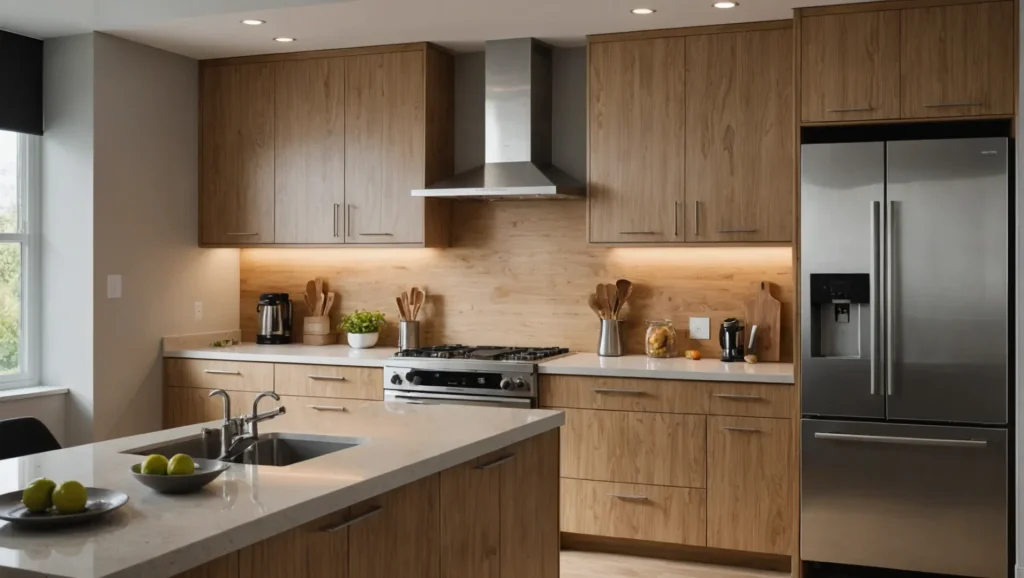
Picture this. You've just finished your dream kitchen. The cabinets looked great when they were recently installed. However, with the arrival of the monsoon, peeling and swelling along the bottom edge of sink cabinets is apparent.
Peeling and swelling edges are common problems with many recently constructed kitchens. It is not a quality issue with carpentry. It is because the contractors use lower grade plywood in places that they should not.
This article is a must have for anyone planning a new house or renovation in the state of Kerala. We explain the differences between BWP and BWR plywood. With this information you can save money by not buying overpriced plywood and buy the materials that really make a difference for your home.
First, What Do BWP and BWR Actually Mean?
BWR stands for Boiling Water Resistant. BWP stands for Boiling Water Proof.
They look almost identical from the outside. The differences are in the glue and how it is made. BWR plywood uses a type of adhesive that is made to be resistant to moisture. BWR plywood can be used in slightly humid conditions and can also be used in areas where water can splash.
BWP plywood uses a different type of resin. This type of resin can withstand water and other liquids for a long time.
In India, both BWR and BWP plywood are made to the BIS standards (IS 303 for general purpose plywood and IS 710 for marine plywood). The standard boiling test is longer for BWP, thus BWP can be used in areas where water can't be avoided.
To remember which is which: For BWR, think of the "W" in water resistance, and for BWP, think of the "P" in water proof.
Why This Matters More in Kerala
Kerala isn't like Delhi or Jaipur. We live with:
- Heavy monsoons that last for months
- High humidity all year round
- Salty coastal air, especially in and around Kochi, Alappuzha and Kozhikode
- Termite and fungus problems that thrive in damp conditions
In this climate, the plywood you choose is a long-term decision. Plywood that would last twenty years in a dry city can begin to show problems in five or six years here if it's the wrong grade.
BWP vs BWR: A Quick Comparison
| Feature | BWR Plywood | BWP Plywood |
|---|---|---|
| Full form | Boiling Water Resistant | Boiling Water Proof |
| Adhesive | Moisture-resistant resin | Phenol-formaldehyde resin |
| Water performance | Resists moisture and humidity | Withstands prolonged water contact |
| Best for | Wardrobes, beds, cabinets, furniture in dry to semi-damp areas | Kitchens,bathrooms, balconies, boats, exteriors |
| Durability in Kerala's climate | Very good indoors | Excellent, even in tough conditions |
| Price | More affordable | Higher, but a longer-term investment |
When BWR Plywood Is the Smart Choice
Not every corner of your home needs the most premium (and most expensive) plywood. Good BWR is often the practical choice for:
- Bedroom wardrobes and loft storage
- Beds, side tables, and study units
- TV units and living room furniture
- Shelves, partitions, and false ceilings in dry areas
- Office Interior and Fit-out
Locating Building Werum Resources (BWR) plywood in Kochi is easy, however differentiating the right quality from the rest is the key.
When the location is well ventilated and away from water, BWR plywood is an excellent and economic option. There is no point in opting for more expensive options.
How to Determine if Plywood is BWP:
- Is the area exposed to moisture? If yes, use BWP
- Is the area dry? Use BRP (Boiling Rice Proof)
- Are you planning to live in the home? Use BWP
For good, planned, residences, BWP is used in kitchens and bathrooms. BRP is used in other areas.
How to identify genuine plywood:
- Ask for the bill of sale.
- Check the plywood for the property of the BWP stamp.
Unfortunately, not everything sold as "BWP" or "BWR" is what it claims to be. Before you buy, check:
- The ISI mark and IS number printed on the sheet (IS 303 or IS 710)
- A proper invoice from the dealer, plus the manufacturer's warranty details
- The edges: layers should be even, tight, and free of gaps or patches
- Consistent thickness across the whole board
- The brand's authorised dealer status. Ask for it and don't hesitate to verify.
- The smell: an overpowering chemical odour can be a warning sign
Buying from an established supplier, rather than a random seller offering suspiciously low prices, is the single best protection you have.
Common Mistakes We See (So You Can Avoid Them)
- Using BWR in wet zones to save a little money. It usually costs more in the end.
- Choosing thickness poorly. For example, using 12 mm where 18 mm is needed for shelves that carry weight.
- Ignoring edge sealing. Even the best plywood needs its cut edges sealed and laminated properly.
- Skipping the warranty card. It's your proof if something ever goes wrong.
So, Which One Should You Choose?
Here's the honest summary:
- Choose BWP for anything that faces water, steam, or the coast.
- Choose BWR for dry interiors where you want strength and value.
- Mix both wisely to get the best result within your budget.
Whichever you choose, buy from people who will guide you honestly, not just sell to you.
Where Woodmall Fits In
At Woodmall, we aim to assist homeowners, builders, architects and designers in Kerala in their purchasing decisions. If you require BWP plywood in Kerala, or are searching for BWR plywood Suppliers in Kochi, we will assist you to choose the most suitable grade and thickness for your project, without selling you plywood you don’t need. We will do this without using industry jargon to confuse you. As an added service, if you are looking to source BWR plywood in Kerala for a large project, we will compare the different brands and grades of plywood for you.
FAQ
1. What are the differences between BWP and BWR plywood?
A. BWP has phenolic resin, which can completely withstand water, and is also used where repeated immersion in water is also expected. BWR has a resin which is appropriate for moisture, and can withstand splashing of water.
2. Is BWP plywood waterproof?
A. Plywood with waterproof layering and sealing can withstand water for a long time, and better than other types of plywood. But no plywood can completely withstand water. For long term usage, other factors such as sealing and laminating are important.
3. Can I use BWR plywood to make kitchen cabinets in Kerala?
A. You can for upper cabinets and dry sections, but we recommend BWP for the base units, especially near the sink and stove, because steam and moisture are constant in Kerala's climate.
4. Is BWP plywood much more expensive than BWR?
A. The better resin in BWP increases its cost, and a higher quality control increases its price as well. However, because it can be used in wet areas, its durability makes it the more cost-effective option in the long run.
5. Which plywood is suitable for making bathroom furniture?
A. BWP is ideal for making bathroom furniture and storage units and other furnaces that are in contact with water.
6. Which shops in Kochi sell BWR plywood?
A. For buying genuine BWR plywood, you can contact authorized dealers of the manufacturer. Woodmall can also assist you in buying BWR plywood.
Explore our range of BWR Plywood for home, office and interior applications at Wood Mall.
